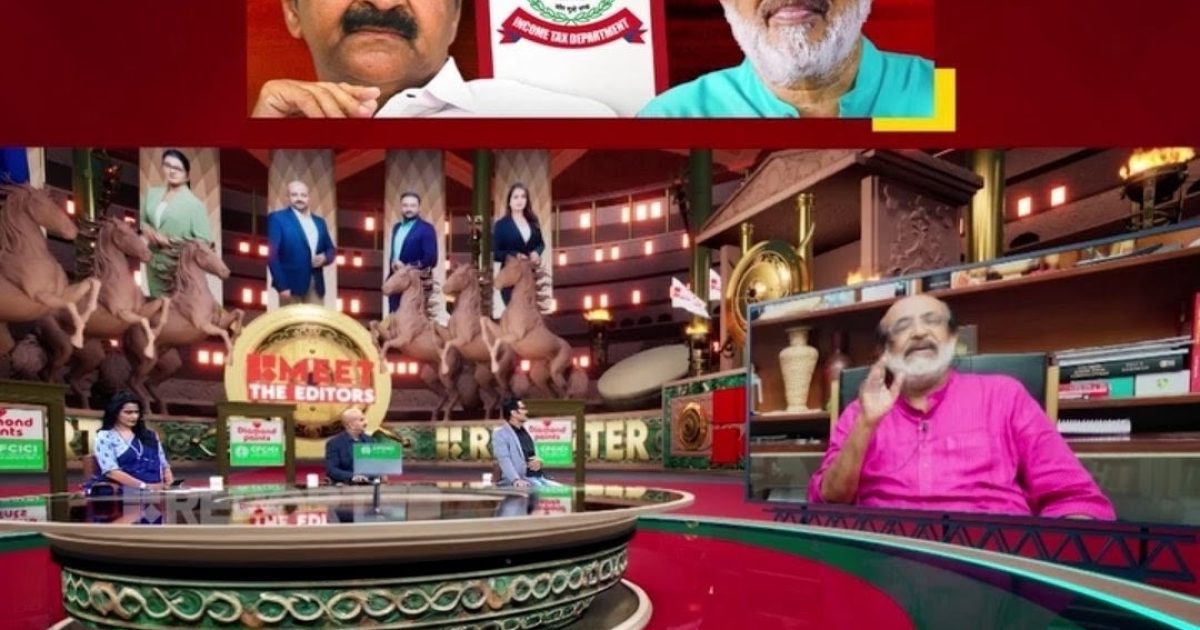
THIRUVANANTHAPURAM: Former Kerala Finance Minister T.M. Thomas Isaac has extended his support to Reporter Broadcasting Company and its Managing Director, Anto Augustine, amid the controversy surrounding the proposed visit of Lionel Messi and the Argentina football team to Kerala.
Questioning the basis for treating the failed event as a case of fraud, Mr. Isaac asked how the failure of Mr. Messi to visit Kerala, by itself, could amount to cheating or financial wrongdoing. He also questioned the allegations relating to Goods and Services Tax (GST) and criticised the action taken by the State government.
According to Mr. Isaac, a television company had attempted to bring Mr. Messi and the Argentina team to Kerala, promoted the proposed event and sought the cooperation of the government. The government was willing to cooperate because the visit was expected to give a boost to Kerala’s sports sector, he said.
Mr. Isaac maintained that the government had neither spent money on the project nor entered into any financial agreement with the company. The expenditure incurred in connection with the project, he said, was borne by the company itself.
He also referred to the renovation work undertaken at the Jawaharlal Nehru International Stadium in Kochi. Even if the renovation had not been completed as originally announced, any work that had been carried out using the company’s funds could not be treated as a loss to the government, he argued.
‘Why the company spent ₹126 crore is a business question’
Mr. Isaac said the question of why a television company would spend ₹126 crore on an initiative to bring Mr. Messi and the Argentina team to Kerala should be examined in the context of the company’s business model.
He said he was not aware of the company’s revenue model, but pointed out that media organisations routinely spend substantial amounts on large-scale events and promotional activities to strengthen their brands.
Citing major events organised by media houses, Mr. Isaac said Reporter Broadcasting Company could also have planned the proposed Messi event as a large-scale promotional and commercial initiative.
The fact that the attempt failed and the company suffered a financial loss, he said, could not, by itself, be treated as fraud.
Where is the GST fraud?
Mr. Isaac also questioned the allegation that GST had not been paid in connection with the proposed Messi visit.
If there was a GST liability, the appropriate action could be taken under the tax laws, he said. However, the legal basis for describing the issue as ‘fraud’ would have to be clearly established.
On the question of tax liability on the advance payment, Mr. Isaac argued that the nature of the service for which the payment was made and the applicable GST provisions would have to be examined.
He said the tax liability should be assessed in the context of the service that the Argentina Football Association was expected to provide. Since the proposed visit ultimately did not take place, the question of whether the corresponding tax liability continued to exist would also have to be examined, he said.
If it was established that the tax had been collected earlier but was subsequently found to be refundable under the law, the amount would have to be returned through the prescribed legal process, he added.
The final position on the GST liability, however, would depend on the findings of the tax authorities and the applicable legal provisions.
‘Investigate any illegality, but do not enter a newsroom’
Mr. Isaac said that if there was evidence of any other illegal activity by Reporter Broadcasting Company, the authorities were free to investigate the matter and take appropriate legal action.
However, he criticised the police action at the offices of the media organisation in connection with the failed Messi project and questioned the manner in which a newsroom was being subjected to investigation.
He also questioned whether similar action was being taken against the offices of other media organisations facing allegations or legal cases.
Mr. Isaac alleged that the action against Reporter TV should be viewed in a political context. He accused the State government of using its authority against those who criticised it. These remain political allegations made by Mr. Isaac and are not established findings of the investigation.
‘The response of other media houses is also noteworthy’
Mr. Isaac also criticised the response of other media organisations to the action against Reporter TV.
He argued that media houses should not forget that they are, fundamentally, news organisations and should not allow intense commercial competition within the industry to determine their response to an issue concerning another media house.
Such an approach, he warned, could eventually have implications for the media industry as a whole.
The central point of Mr. Isaac’s argument is that the failure of an attempt to bring Mr. Messi and the Argentina team to Kerala cannot, by itself, establish a case of criminal fraud. Any criminal liability, he maintained, would have to be based on evidence of a specific violation of law.
“Messi did not come; where is the fraud?” — Mr. Isaac’s question has brought renewed political attention to the action against Reporter Broadcasting Company and its Managing Director, Anto Augustine.
At the same time, the financial and tax-related allegations against the company remain matters for investigation, and any final legal conclusion will depend on the findings of the investigating and tax authorities.