Is Pinarayi Vijayan Facing a Political Sunset?
If an FIR is registered, Pinarayi–Veena–Riyas could face scrutiny; a major political test awaits the CPI(M)
Thiruvananthapuram: The name Pinarayi Vijayan in Kerala politics represents more than an individual leader. Over the past several years, he has come to symbolise political authority, organisational control and electoral strength within the Communist Party of India (Marxist). But at this stage of his political career, the challenges confronting him are no longer confined to routine political criticism. Investigations, allegations and possible legal proceedings have together opened a new chapter in the political debate surrounding the Chief Minister.
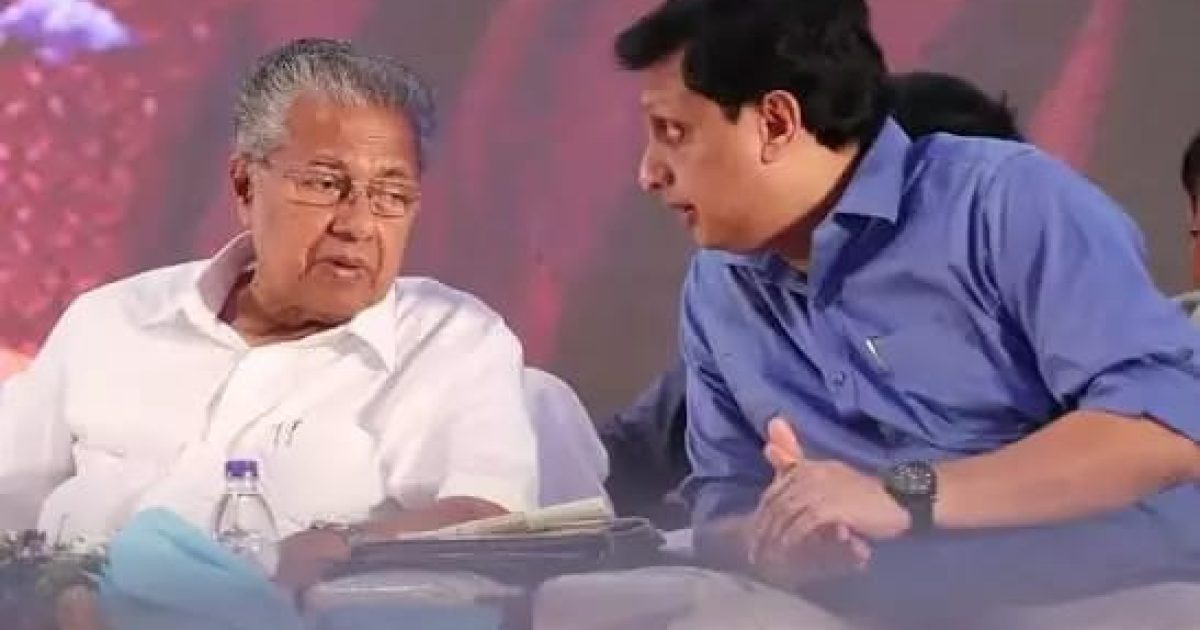
The Enforcement Directorate’s reported demand for registration of a First Information Report (FIR) in connection with the alleged financial transactions involving Cochin Minerals and Rutile Ltd. (CMRL) and Exalogic Solutions has added a new dimension to the controversy. Pinarayi Vijayan, his daughter Veena Vijayan and his son-in-law and Minister P. A. Mohammed Riyas have figured prominently in the political discourse surrounding the case.
It is important, however, to draw a clear distinction between an FIR, an investigation and the establishment of criminal liability. Registration of an FIR does not amount to proof of guilt, nor does it automatically imply arrest or conviction. The nature of the evidence, the findings of the investigating agencies and the eventual judicial scrutiny will determine the legal course of the case.
The political consequences, however, may emerge much earlier.
The prospect of the Chief Minister, his daughter and his son-in-law being discussed together in the context of a criminal investigation presents a significant political challenge for Mr. Vijayan and the CPI(M). Even before a court reaches any conclusion, the controversy could raise questions about political accountability, transparency and the credibility of the administration.
Mr. Vijayan has faced serious political controversies at different stages of his career, including the SNC-Lavalin case and the controversy surrounding the alleged payments to Exalogic. Allegations, investigations and convictions are legally distinct matters. Yet, prolonged investigations and recurring controversies can have an impact on the political image of a leader, particularly when they become part of a sustained public debate.
For the CPI(M), the central question is how it responds if the investigation advances.
Simply dismissing the proceedings as politically motivated may not be sufficient if investigators produce additional documents or evidence. At the same time, the party would have to balance its political responsibility to its leadership with the need to maintain public confidence in institutions and due process.
Kerala remains the strongest electoral base of the Left in India. Yet, the political decline of the CPI(M) in West Bengal and Tripura serves as a reminder that organisational strength alone cannot guarantee long-term political survival. Once public confidence begins to erode, its effects may eventually become visible both electorally and organisationally.
There is, at present, no basis to claim that CPI(M) cadres are moving to the BJP in large numbers. Such a claim would require credible evidence. However, any erosion in the traditional support base of the Left, or a decline in confidence in its leadership, could create political space for rival formations.
Mr. Vijayan has survived several political crises during his long career. It would therefore be premature to conclude that his political decline has begun. The present challenge, however, has a different character. Political allegations can be countered politically; legal proceedings require responses based on evidence, procedure and law.
That is why the present controversy cannot be viewed merely as a personal challenge to the Chief Minister.
It could become a test of Mr. Vijayan’s political credibility, the CPI(M)’s ability to manage a prolonged controversy, and the mood of its cadre and traditional support base.
The next phase will depend largely on what happens on the legal front. Whether an FIR is registered, the precise nature of the allegations, what evidence emerges during the investigation and how the courts respond will determine the direction of the case.
An FIR, by itself, is not the political end of a leader. Nor does an investigation establish guilt. But for a powerful political leader, a criminal investigation can become the beginning of a serious political credibility crisis.
The larger question, therefore, is not simply whether Pinarayi Vijayan is approaching the end of his political career.
It is whether the latest controversy will remain a legal and political challenge to one leader—or develop into a wider test of the CPI(M)’s political foundation in Kerala.
For now, the answer cannot be provided by political speeches or partisan claims.
The evidence emerging from the investigation, the course of legal proceedings and, ultimately, the verdict of the people will decide what comes next.