Kodiyeri Balakrishnan’s Flex Torn During SFI March in Kollam; Political Lapse or Sign of Internal Discord?
SFI leadership says person who damaged the banner was not a member; incident raises questions over political awareness and organisational discipline
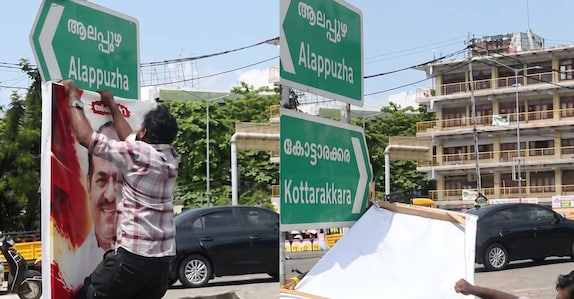
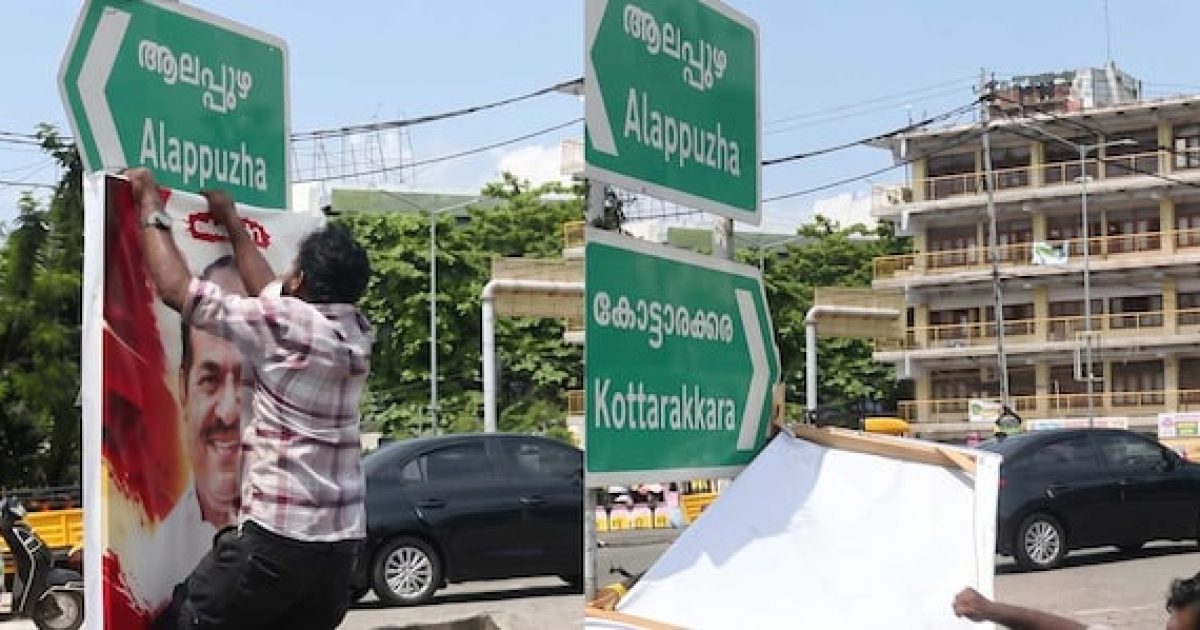
Kollam: A flex board featuring late CPI(M) leader and former state secretary Kodiyeri Balakrishnan was torn down during an SFI protest march in Kollam on Thursday, triggering a political controversy and questions over organisational discipline.
The incident took place near the Head Post Office at Chinnakkada during an SFI march organised in protest against alleged attacks on SFI activists in Thiruvananthapuram. The flex had been installed as part of the observance of Kodiyeri Balakrishnan’s fourth death anniversary.
Visuals of the incident showed a person emerging from the protest procession, approaching the flex board and pulling it down. The person then returned to the procession and continued raising slogans. A voice from the crowd can also be heard questioning whether the banner being torn was Kodiyeri’s flex.
The incident initially triggered criticism after reports identified the person as an SFI activist. However, the SFI Kollam district committee subsequently clarified that the individual was not a member of the organisation and did not belong to any of its area, local or unit committees.
According to the district committee, the person had unexpectedly entered the procession from the middle and damaged the flex. The SFI said it would examine how he joined the protest march and stated that legal action would be pursued over the incident.
The CPI(M) district leadership has also reportedly expressed strong displeasure over the incident, while the SFI state leadership has sought an explanation.
The controversy assumes significance because the incident occurred on the fourth death anniversary of Kodiyeri Balakrishnan, a prominent CPI(M) leader who served as the party’s state secretary and a minister in the Kerala government.
Questions are nevertheless being raised over how a banner carrying the image of a senior leader of the same political movement came to be damaged during a protest organised by its student wing.
The episode has also coincided with renewed political discussion surrounding Kodiyeri’s family. On his father’s fourth death anniversary, Bineesh Kodiyeri wrote about his father’s approach to personal controversies and the relationship between the party and his family. Bineesh said Kodiyeri had never used the party as a shield in personal matters and had instead stood as a shield for the party.
Some political observers have interpreted those remarks as having wider implications within the CPI(M), although there is no confirmed evidence linking Bineesh Kodiyeri’s statements to the incident in Kollam. Reports describing the remarks as an indirect political message remain interpretations rather than established facts.
The Kollam incident, therefore, has raised two separate questions: whether the destruction of Kodiyeri’s image was simply an act by an individual who entered the protest procession, and whether it reflects a broader decline in political awareness and organisational discipline among sections of the younger generation.
There is currently no evidence establishing that the incident was carried out on the instructions of any senior CPI(M) or SFI leader. The SFI’s official clarification specifically distances the organisation from the individual involved.
The incident has nevertheless prompted questions about the political education of student activists, respect for the movement’s own leaders and the responsibility of political organisations to maintain discipline during public protests.
For the CPI(M) and SFI leadership, the immediate issue is likely to be whether the incident should be treated as an isolated act by an unaffiliated individual or as a matter requiring closer scrutiny of organisational conduct.