Sree Narayana Guru: A Vision That Continues to Illuminate
Ninety-nine years have passed since Sree Narayana Guru entered Mahasamadhi. Yet, the passage of nearly a century has done little to diminish the relevance of his ideas. If anything, the questions he raised about knowledge, equality, social dignity and the moral purpose of human life have acquired renewed significance in a rapidly changing world.
Guru was not merely a social reformer of his time. He was a philosopher who sought to transform both the individual and society. His vision brought together spirituality, reason, education, social equality and human dignity at a time when caste divisions and social discrimination were deeply embedded in Kerala’s social order.
The 99th Mahasamadhi Day, being observed across Kerala and at Sivagiri and other centres associated with the Guru, is therefore not simply an occasion for remembrance. It is also an opportunity to revisit a body of thought that continues to engage with some of the fundamental questions of modern society.
The primacy of knowledge
One of the enduring features of Guru’s thought was his emphasis on education and intellectual awakening. He recognised that social emancipation could not be achieved through ritual reform alone. Knowledge had to become accessible, and education had to become an instrument of social transformation.
The official Kerala Tourism account of Guru’s social reform records his emphasis on education as the foundation of enlightenment and his advocacy of schools, libraries, literary societies and vocational training. His call to “be enlightened through education” reflected a remarkably modern understanding of social progress.
This emphasis acquires particular significance in an age in which science and technology increasingly shape the possibilities of human life. Guru’s larger message was not merely about acquiring information; it was about cultivating reason, discernment and self-awareness.
The advancement of science, in such a framework, cannot be separated from the advancement of the human being.
From outer darkness to inner illumination
Guru’s philosophical works take the enquiry further — from society to the individual.
Atmopadesa Satakam invites the seeker to turn inward and examine the nature of the self. The search for knowledge is therefore not confined to the external world. It is also an exploration of consciousness.
The distinction between external light and inner illumination is central to understanding Guru’s philosophical vision. To remove ignorance is to bring light into one’s own inner world; and the transformation of the individual becomes meaningful when that light finds expression in social life.
This is why Guru’s spiritual philosophy cannot easily be separated from his social philosophy. Inner awakening and social reform were, for him, complementary dimensions of human progress.
A philosophy beyond social divisions
Guru’s celebrated message — “One Caste, One Religion, One God for humankind” — emerged in a society marked by rigid caste distinctions. It was not simply a religious proposition but a profound assertion of human equality and dignity.
The continuing public relevance of this message was reflected recently in official remarks by Vice-President C. P. Radhakrishnan, who described it as a call for equality, dignity and universal brotherhood.
Guru’s reform therefore transcended the interests of any single community. His interventions sought to challenge social exclusion and to create a broader conception of human fellowship.
His consecration of temples and his advocacy of education were part of the same larger project — to create institutions and ideas capable of restoring dignity to those denied it by the prevailing social order.
Kerala’s renaissance and Guru’s legacy
The Kerala into which Guru emerged was deeply stratified by caste and custom. His contribution to the social renaissance that followed was not confined to any single reform.
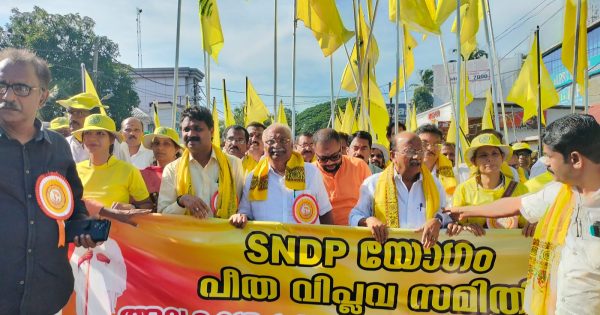
He encouraged education, organisation, social mobility and self-respect. The formation of the SNDP Yogam and the wider social awakening associated with the movement helped create new avenues for collective action and social transformation.
Guru’s legacy is consequently larger than the institutions that carry his name. It lies in the transformation of the way people came to think about themselves and about society.
He sought to replace inherited hierarchy with dignity, ignorance with knowledge and social fragmentation with fraternity.
A living memory
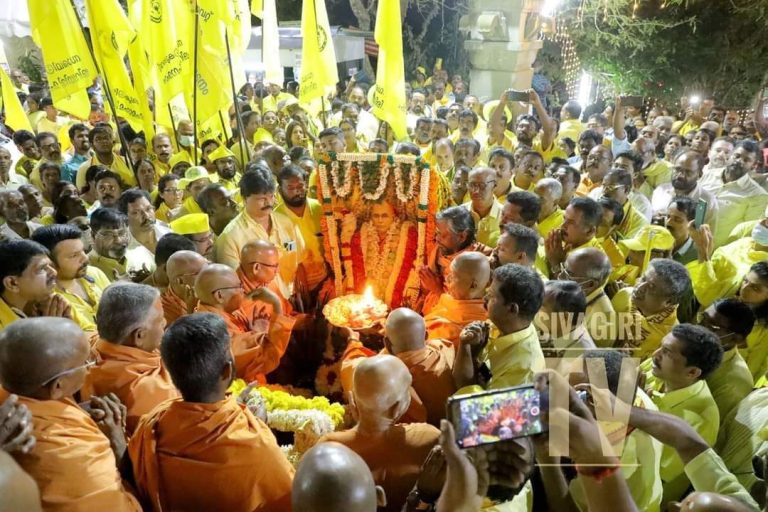
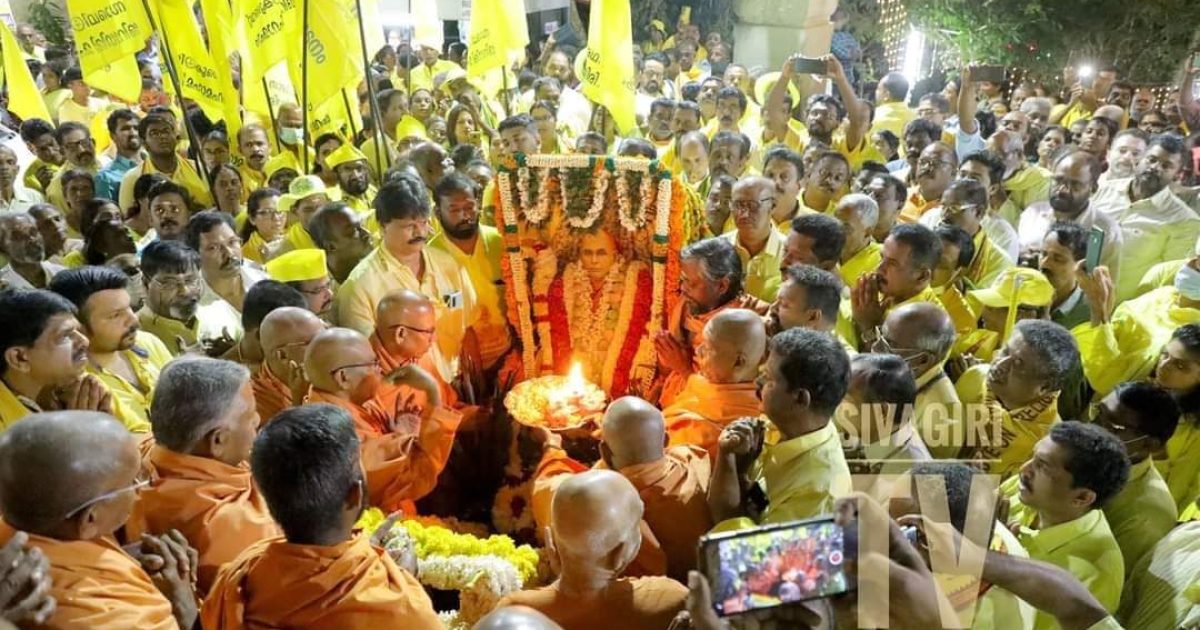
The observance of Mahasamadhi Day across Kerala demonstrates that Guru remains deeply embedded in the cultural and spiritual memory of the State. At Sivagiri, Chempazhanthy and other centres associated with him, prayers, rituals, conferences and community gatherings mark the occasion. The 99th Mahasamadhi observance at Sivagiri is also the beginning of the centenary observance of the Guru’s Mahaparinirvana.
Yet the significance of the day extends beyond ritual remembrance.
The continuing practice of community prayer and sharing of food reflects an aspect of Guru’s vision that is sometimes overshadowed by institutional observances: the creation of a society in which human beings meet one another without the barriers of caste and status.
A message for the present
Guru left behind a remarkable body of writings, including Daiva Dasakam, Atmopadesa Satakam and Darsanamala. They represent different dimensions of a philosophical vision that brought together spirituality, reason, ethics and social responsibility.
His relevance today does not rest merely on the historical importance of his reform movement. It rests on the continuing questions his philosophy poses.
What is the purpose of knowledge?
Can scientific progress be separated from human values?
Can spiritual awakening coexist with social responsibility?
And can a society truly progress when inequality and prejudice continue to divide human beings?
Nearly a century after his Mahasamadhi, these questions remain open.
That may be the most enduring aspect of Sree Narayana Guru’s legacy. He did not leave behind merely a memory to be worshipped. He left behind a body of thought to be studied, questioned, understood and lived.
His Mahasamadhi marked the end of a physical presence. It did not mark the end of his intellectual and spiritual journey.
As the centenary of his Mahaparinirvana approaches, the most meaningful tribute may therefore be not merely to remember the Guru, but to revisit the values he placed at the centre of human progress: knowledge, equality, dignity, reason and compassion.
Om Paramagurave Namah.