Former Kerala Chief Minister asked to appear before the Enforcement Directorate in Kochi on October 23; summons does not imply guilt
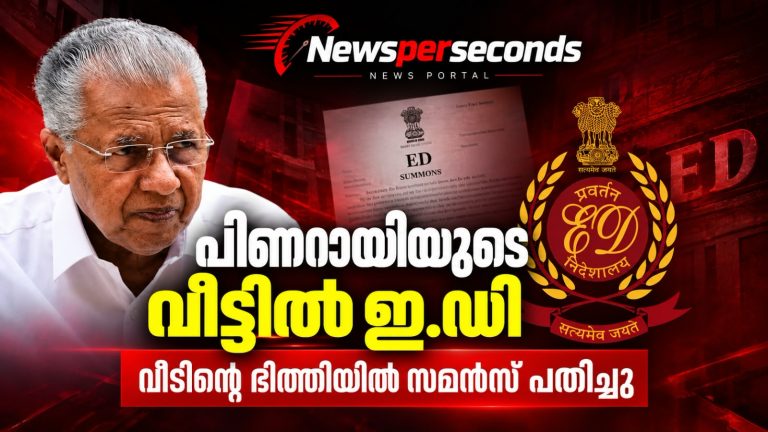
THIRUVANANTHAPURAM: The Enforcement Directorate (ED) has reportedly issued a summons to former Kerala Chief Minister Pinarayi Vijayan under Section 50 of the Prevention of Money Laundering Act (PMLA) in connection with the Masappadi case. He has been directed to appear at the agency’s Kochi office at 11 a.m. on October 23 and provide a statement along with relevant documents, according to media reports.
Section 50 of the PMLA empowers the ED to summon individuals, record statements and require the production of documents during an investigation. The issuance of a summons marks a procedural step in the inquiry, but it does not establish criminal liability. Questioning, the establishment of an offence and arrest are distinct legal processes governed by applicable law.
The investigation concerns alleged financial transactions involving Cochin Minerals and Rutile Limited (CMRL) and Exalogic Solutions, a company associated with Vijayan’s daughter. Reports indicate that the ED has registered two Enforcement Case Information Reports (ECIRs) in connection with matters arising from cases registered by the Vigilance and Anti-Corruption Bureau (VACB). The alleged payments made by CMRL to Exalogic are central to the investigation. The allegations have been denied by those concerned.
Summons reportedly affixed at residence
According to media reports, ED officials visited Vijayan’s residence in Thiruvananthapuram while he was away to serve the summons. After those present at the residence reportedly declined to accept it, the officials are said to have affixed the notice to a pillar outside the house. The summons was also reportedly sent by post.
The circumstances surrounding the service of the summons, including the method adopted by the agency, could become relevant to any legal challenge. The legal validity of the process will depend on the applicable statutory provisions and the facts of the case.
Attendance and further legal proceedings
Vijayan’s response to the summons and the course of related proceedings before the Supreme Court are expected to be closely watched. Media reports suggest that he may cite the ongoing Assembly session as a reason for seeking an accommodation regarding his appearance. Any such request, and the ED’s response to it, would need to be assessed on the basis of the actual communications and applicable law.
Failure to appear in response to a summons does not automatically result in arrest. Any further action would depend on the relevant legal provisions, the circumstances and the decisions of the competent authorities or courts.
The investigation is likely to remain under scrutiny over both the substance of the alleged financial transactions and the legality of the procedures followed by the agency. Ultimately, the case will turn on the evidence gathered, the applicable law and judicial decisions. The allegations remain subject to investigation and legal determination.