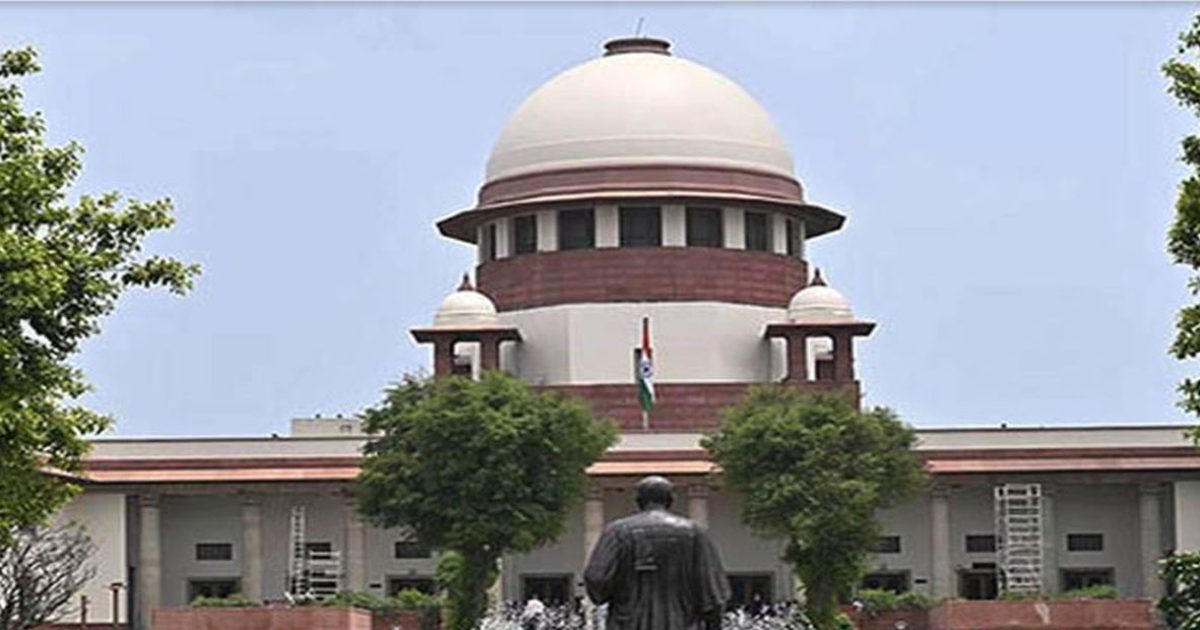
New Delhi: The Supreme Court has ruled that governments cannot acquire all private properties solely by citing public interest. The court struck down a prior order allowing governments to acquire and redistribute private land for public purposes. This crucial verdict was delivered by a nine-judge Constitution Bench headed by Chief Justice D.Y. Chandrachud, with an 8-1 majority.
The ruling overturned a 1978 judgment led by Justice V.R. Krishna Iyer. The Bench addressed the long-debated question of whether private property could be included within “material resources of the community,” as outlined in Article 39(b) of the Indian Constitution. Alongside Chief Justice D.Y. Chandrachud, Justices B.V. Nagarathna, Hrishikesh Roy, Sudhanshu Dhulia, J.B. Pardiwala, Manoj Misra, Rajesh Bindal, Satish Chandra Sharma, and Augustine George Masih comprised the Bench.
In his majority opinion, Chief Justice Chandrachud clarified that while privately-owned resources might be included in community resources, it depends on the context. Justice B.V. Nagarathna concurred in part, whereas Justice Sudhanshu Dhulia dissented fully, writing a separate opinion. The Bench interpreted Article 39(b) of the Constitution, which concerns the government’s authority to control and redistribute material resources within society for public welfare.
The decision emphasized the need to consider factors such as the resource’s nature, scarcity, impact on public welfare, and issues that could arise from private control. The ruling responded to petitions challenging laws enabling the government to acquire hazardous, deteriorating buildings in Mumbai. The majority opinion stressed that government acquisition alone does not always ensure public benefit.